Skip to content

Home

Welcome to Museum Lichtenberg

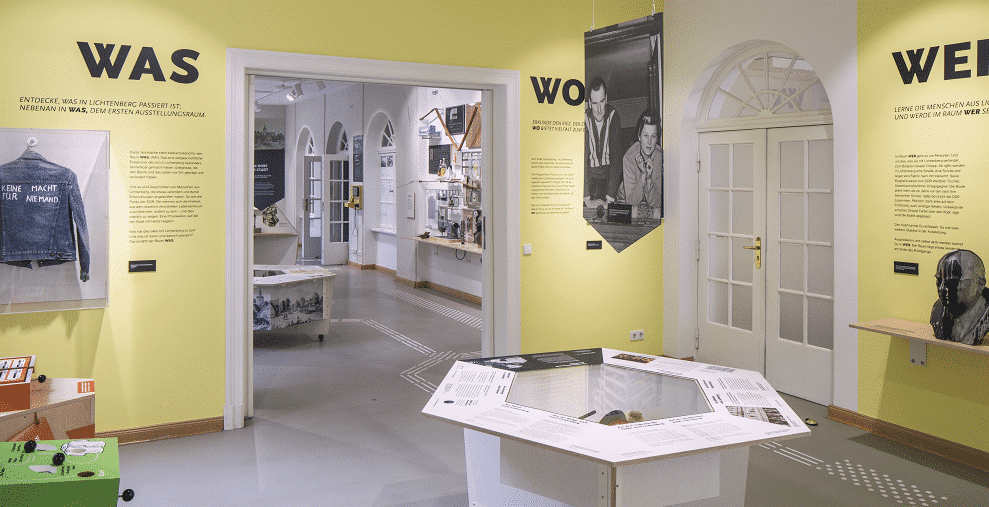
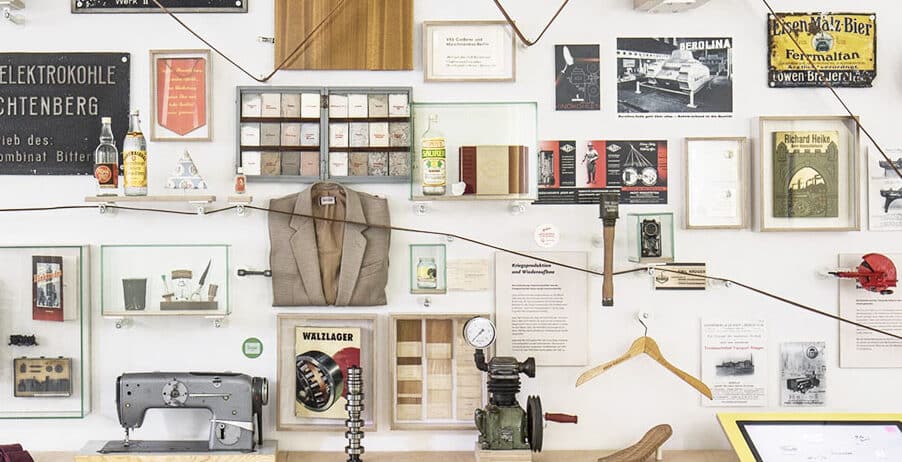
Our new permanent exhibition tells the story of how Lichtenberg became what it is today and what makes it so special. The exhibition focuses on the themes of Work, Life, and Change, which visitors can explore across four exhibition spaces: WHAT? WHERE? WHO? WOW!

WHAT? WHERE? WHO? Lichtenberg WOW!

We remember…

We remember…

110. Birthday of Ursula Goetze (March 29, 1916 – August 5, 1943)
Ursula Goetze had come under the scrutiny of the fascist persecutors as part of the investigation dubbed the “Red Orchestra” by the Gestapo. The group of nearly 120 anti-Nazi activists from across Germany and Europe, centered around Arvid Harnack and Harro Schulze-Boysen, was arrested after being exposed, and many of them were sentenced to death in summary trials. They lost their young lives on August 5, 1943, at the Plötzensee execution site. On the same day, Hilde Coppi, Liane Berkowitz, Cato Bontjes van Beek, Eva-Maria Buch, and Maria Terwiel also met violent deaths in Plötzensee. They, too, are counted among the circle around Harnack and Schulze-Boysen.

A street in the Karlshorst neighborhood has been named after Ursula Goetze since 1976. A commemorative plaque at Hornstraße 3 in Kreuzberg has honored the anti-fascist since 1987. A memorial stone on the grounds of Humboldt University also bears her name, alongside those of Arvid and Mildred Harnack and Liane Berkowitz, among others.

Upcoming events

März/April

Tuesday-Sunday

11 a.m.–6 p.m.

Exhibition

Industrial towers of the former VEB Elektrokohle Berlin

Not far from the Dong-Xuan Center, two industrial towers rise into the sky—relics of Berlin’s long-gone industrial past.

30

April

Thursday

6:30 pm

Opening of the Exhibition

Opening of the “Colonial Biographies” Exhibition

April 30, 2026, Thu, 6:30 p.m. Silent opening / Upgrade of the “Street Names” exhibition. The current exhibition will be redesigned. Presentation of the brochure “Lichtenberg Queer”

30

April

Thursday

6:30 pm

Opening of the Exhibition

Silent Opening / Upgrade Exhibition “Street Names”

Silent Opening / Upgrade of the “Street Names” Exhibition The current exhibition is being redesigned.

Plan Your Visit

Wheelchair icon for wheelchair users
Icon for accessibility

Accessible Museum

Museum Lichtenberg welcomes all visitors and is committed to making its exhibitions accessible to all. Find out more about accessability around the museum.

Shelf with labeled boxes
Archive (stock image, AI-generated)

Research On-Site

The museum also includes a comprehensive archive with documents, historic records, objects and photos as well as a reference library.

Floor guidance system for the permanent exhibition at the Lichtenberg Museum
Permanent exhibition, floor guidance system, 2024

360 Degree Tour

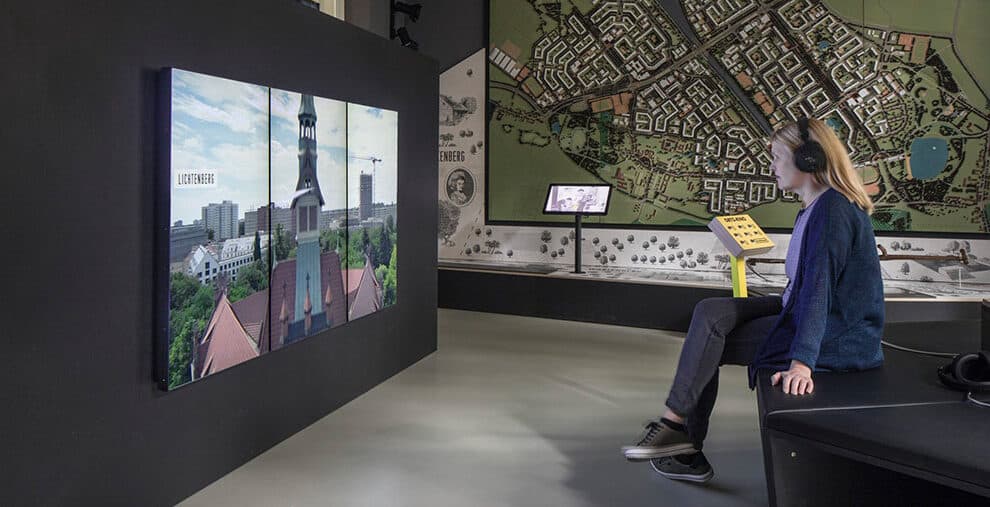
Come and pay us a digital visit. Here you can see the permanent exhibition from above.

Educational Opportunities

… For Families, Teachers and Students on School Visits, Children and Everyone Else Who Is Hungry For Knowledge.

Here you can find guided tours, workshops and events that accompany our exhibitions.

Projects

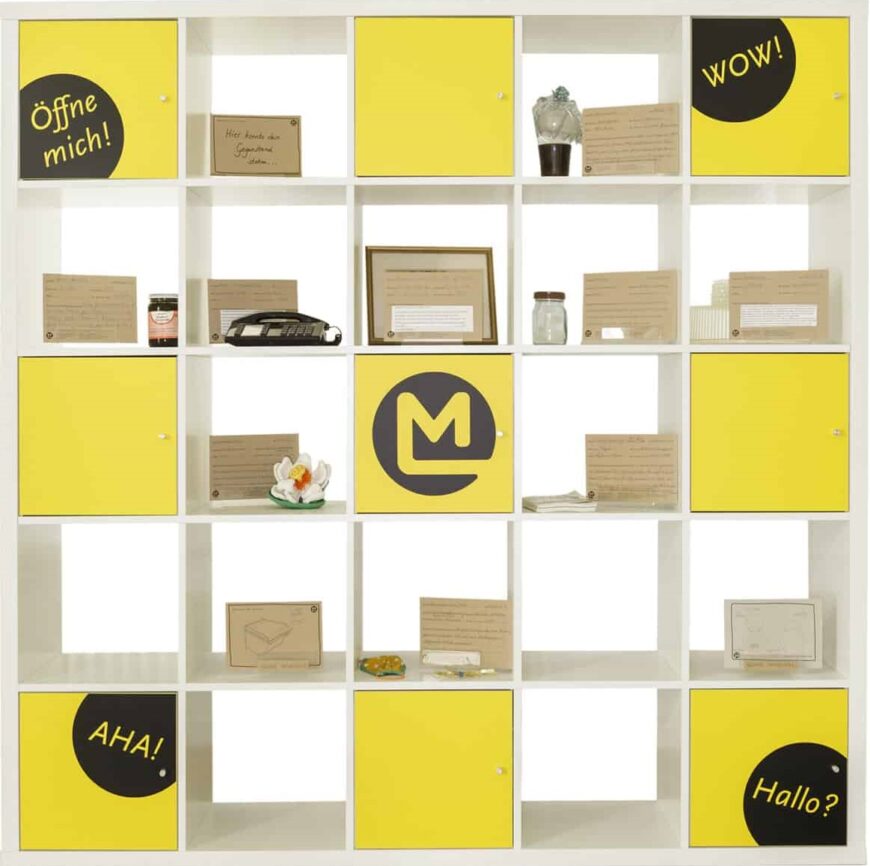
A shelf with 25 compartments, filled with items
A shelf with 25 compartments filled with items Photo: Peter Thieme

Share your mementos!

Become a part of Lichtenberg’s history!

Museum Lichtenberg is looking for your mementos to become part of its permanent exhibition.

Starting in September, the performance group K.I.E.Z.
ToGo will be holding interactive events in public spaces throughout the city. Which item from your personal collection would you like to lend to the Lichtenberg Museum, along with a memory associated with it? We are looking for items from your personal history, family history, or general contemporary history—everyday, personal, or historical objects. The associated memories and details can be shared in writing or verbally at the Lichtenberg Museum.
The item will be on display at the museum after it is donated. It must not exceed 30×30×30 cm in size

Contact:
Archiv- und Sammlungsleiter
Dr. Dirk Moldt
030 57797388 18
Moldt@Kultur-in-Lichtenberg.de

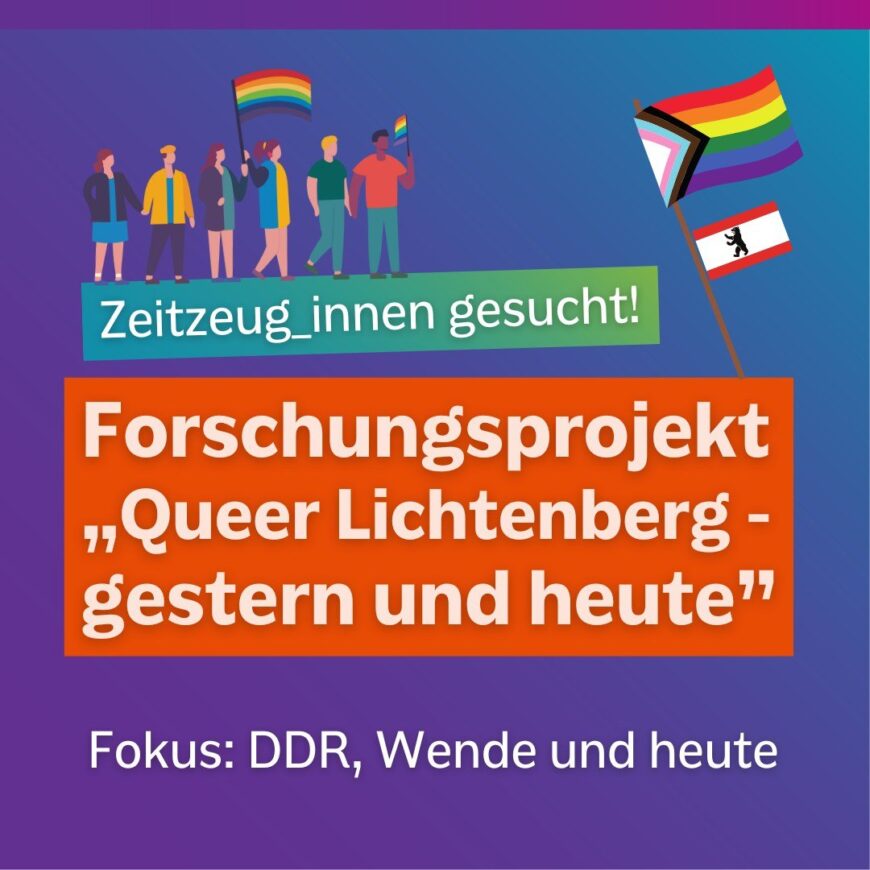
Poster: Queer Lichtenberg, yesterday and today
Queer Lichtenberg, yesterday and today

We are looking for eyewitnesses!

We are seeking your help for the research project “Queer Lichtenberg – yesterday and today”
We are interested in your experiences and impressions from the period before 1989, through the years of transition, right up to the present day. What was it like in Lichtenberg? How did you get on? Were there any meeting places? Did you feel safe? Where did you go dancing and partying? We are interested in stories of everyday life with its ups and downs, courage and hardships, loneliness and supportive friendships. We would be delighted if you would like to share your personal story. So that it is not forgotten.
It has been, and continues to be, largely overlooked by the public that Lichtenberg has been, and remains, a place where many queer people live and work. ‘Queer’ is the umbrella term for various non-heterosexual orientations and genders. With the aim of making this way of life visible in the urban space, Sabine Pöhl, the Diversity and Queer Officer for the Lichtenberg district, launched a research project in cooperation with the Museum Lichtenberg to explore queer social movement history through the stories of key figures.

Contact:
Archiv- und Sammlungsleiter
Dr. Dirk Moldt
030 57797388 18
Moldt@Kultur-in-Lichtenberg.de

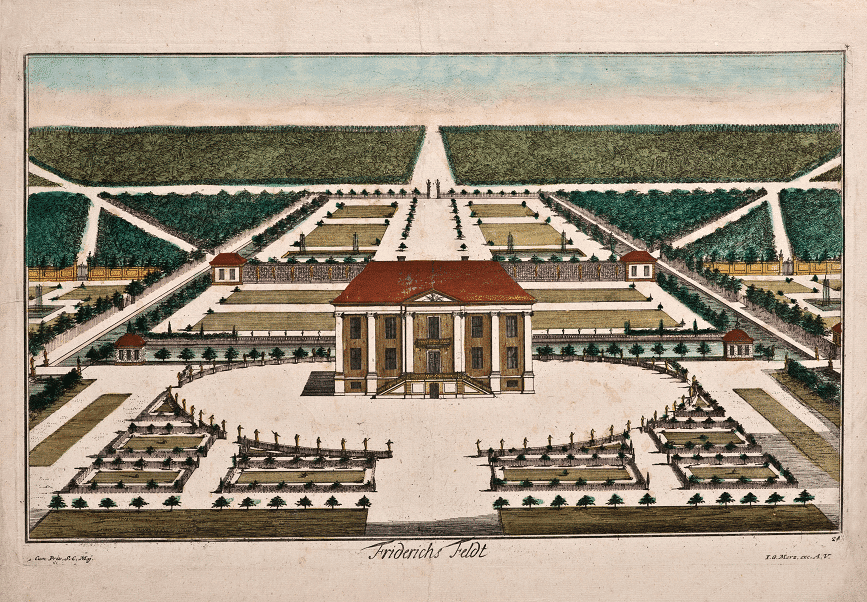
Drawing of Friedrichsfelde Palace and the surrounding gardens
“Friedrichs Feldt”, Friedrichsfelder Schloss um 1700, Zeichnung von Jean Baptiste Broebes, Signatur: Stadtmuseum Berlin GDR 90-24

Colonial Traces in Lichtenberg

Museum Lichtenberg is on the trail of colonialism in Lichtenberg. What we’ve found so far sheds some light on the district’s colonial history, for example Benjamin Raule and Schloss Friedrichsfelde.
What does Lichtenberg have to do with German colonialism? At first glance, there don’t seem to be any buildings in the district (anymore) that hint at colonial connections. A new publication now presents research findings that nevertheless reveal traces of colonialism in the district.

The new publication “Colonial Traces in Lichtenberg,” published by the Museum Lichtenberg, presents the latest findings from a wide range of research. This exploration of regional history paints a complex and surprising picture of the district’s colonial connections. Photos in the volume show that people from Africa apparently played a role in the Stralau fish parade water processions for many years. The Buren Quarter in Karlshorst also has a connection to colonial history. With these and other examples, the volume should be understood as a preliminary assessment. Further projects will follow

Newsletter

Subscription: Sign up now for our newsletter – for your Museum Lichtenberg.

Discover Your Neighborhood!

Icon for the Lichtenberg Cultural Map

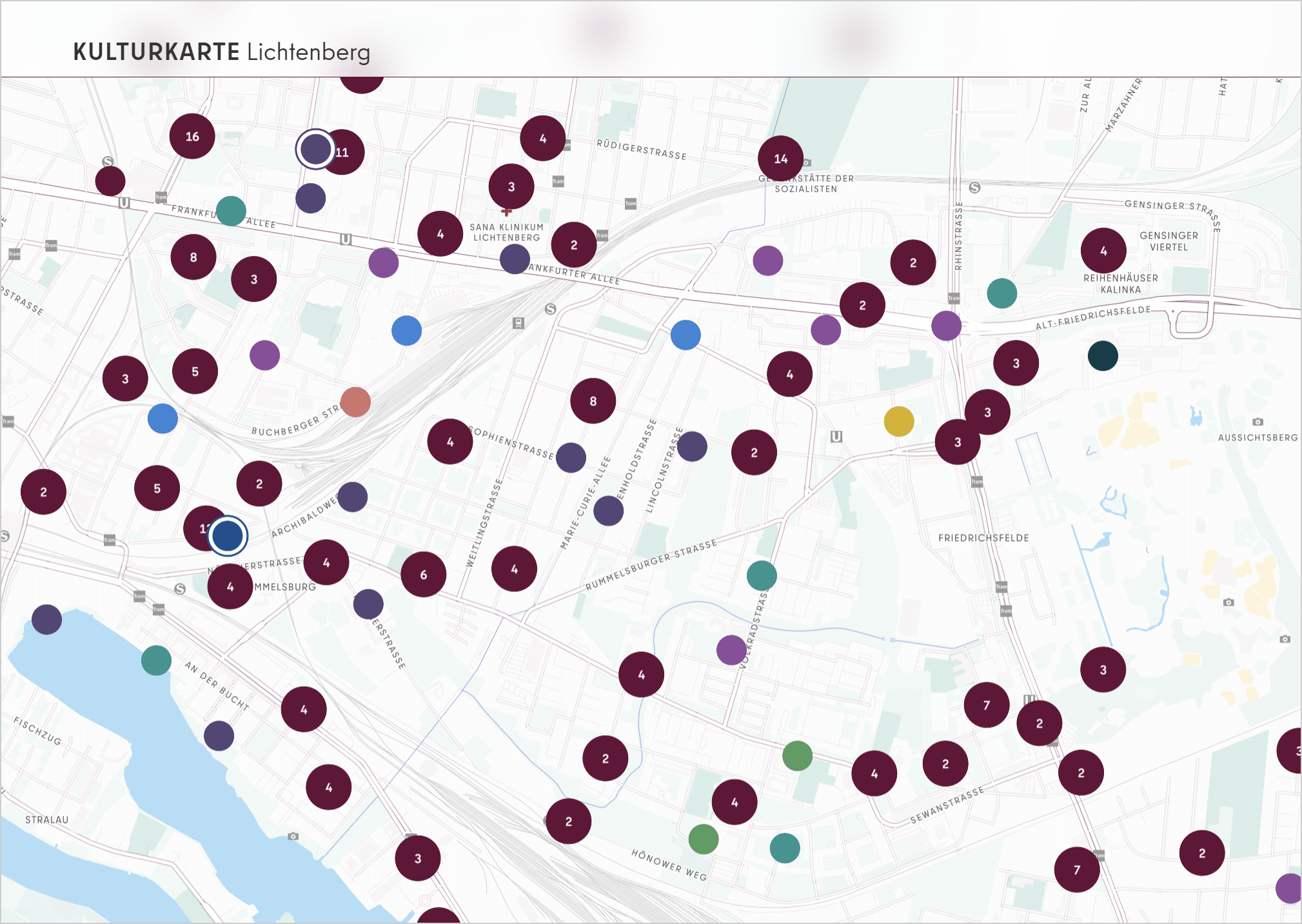
Kulturkarte Lichtenberg, a cultural map of Lichtenberg

Use the interactive Lichtenberg Culture Map to get an overview of the diverse cultural landscape, featuring museums, galleries, libraries, exhibitions, and venues offering theater and concerts.
Lichtenberg is a key site of historical upheaval: still a rural community before 1900, it quickly developed into a Berlin district with modern urban infrastructure, commerce, and industry. Virtually all of Germany’s major historical events have left their mark here—from the March Uprising of 1919 to a signature in Karlshorst that ended World War II, from the activities of the Stasi headquarters to meetings of the peace, environmental, and human rights movements at the Erlöserkirche in Rummelsburg.

The Berlin district of Lichtenberg aims to use the digital and interactive cultural map to highlight the number of cultural sites and their distribution throughout the district. The cultural map also points the way to places in the district where German history is authentically visible: visitors can discover monuments, memorial sites, and Stolpersteine that commemorate the murder of Jewish residents of Lichtenberg. With a total of 12 current themed tours, visitors can explore the district on their own and get to know it anew.