Skip to content

Permanent Exhibition
Exhibitions

The permanent exhibition is the heart of the museum and tells how Lichtenberg became what it is today. Changing special exhibitions shed light on a variety of facets of Lichtenberg’s past and present.
Admission to all exhibitions is free of charge.

Permanent Exhibition

Made in Lichtenberg
Made in Lichtenberg
Foto: Museum Lichtenberg

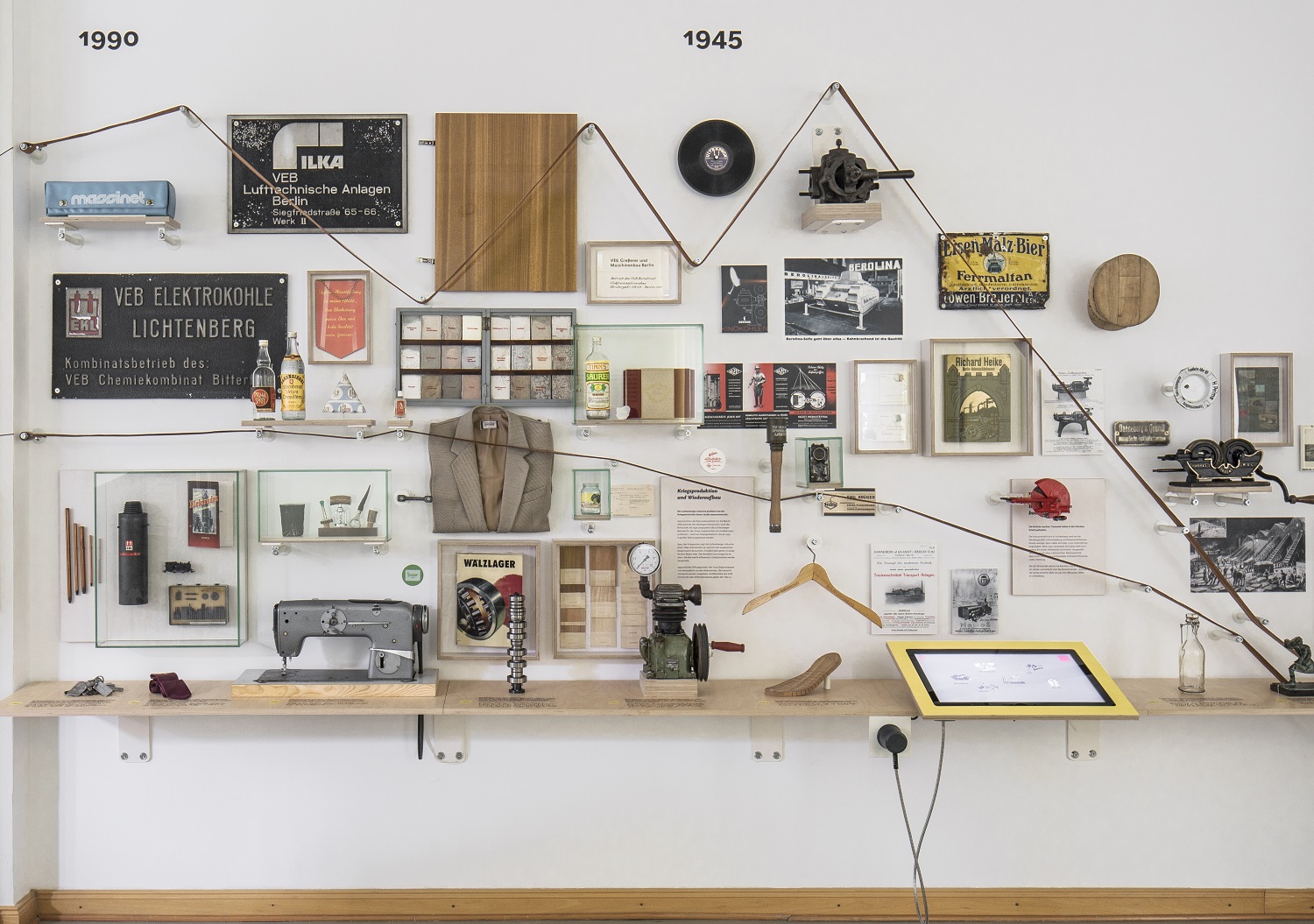
Lichtenberg is a district of diversity. Many different things come together here: village, city and large housing development, neighborhood and world history, people of different backgrounds and interests. It is a district in motion that continually reinvents itself. Our permanent exhibition is inspired by this. It is adventurous and has multiple points of view. It does not present ONE opinion, but instead provides different perspectives of Lichtenberg. It does not follow ONE history, but instead illuminates many different facets. It provides points of orientation to understand how Lichtenberg became the district that it is today.

The permanent exhibition of Museum Lichtenberg is → designed inclusively and has numerous interactive stations.
→ Plan your visit

The permanent exhibition recounts what makes Lichtenberg so special. The focus here is placed on the topics of working, living and changing, which can be experienced in four exhibition spaces:
WHAT talks about the historical events of the district.
WHERE presents the diversity in the different neighborhoods.
WHO revolves around people and is open for new ideas with a creative island.
WOW presents surprising things from Lichtenberg
Die neue Dauerausstellung im Museum Lichtenberg wird gefördert aus Mitteln der LOTTO-Siftung Berlin.

Das Vorhaben „Umrüstung der Beleuchtung auf LED im Museum Lichtenberg“ (Projektlaufzeit: 11/2019 bis 03/2021) wird im Berliner Programm für Nachhaltige Entwicklung (BENE) gefördert aus Mitteln des Europäischen Fonds für Regionale Entwicklung und des Landes Berlin (Förderkennzeichen 1285-B2-K).

WHAT?

Historical events that shape the district (and life in it).

One focus of the permanent exhibition is the industrial history of Lichtenberg. It shows how dynamically the district developed within a very short time from the 19th century until today, how adventurous and inventive it is and what kinds of interesting people lived and worked here.

The Beginnings 1900–1933

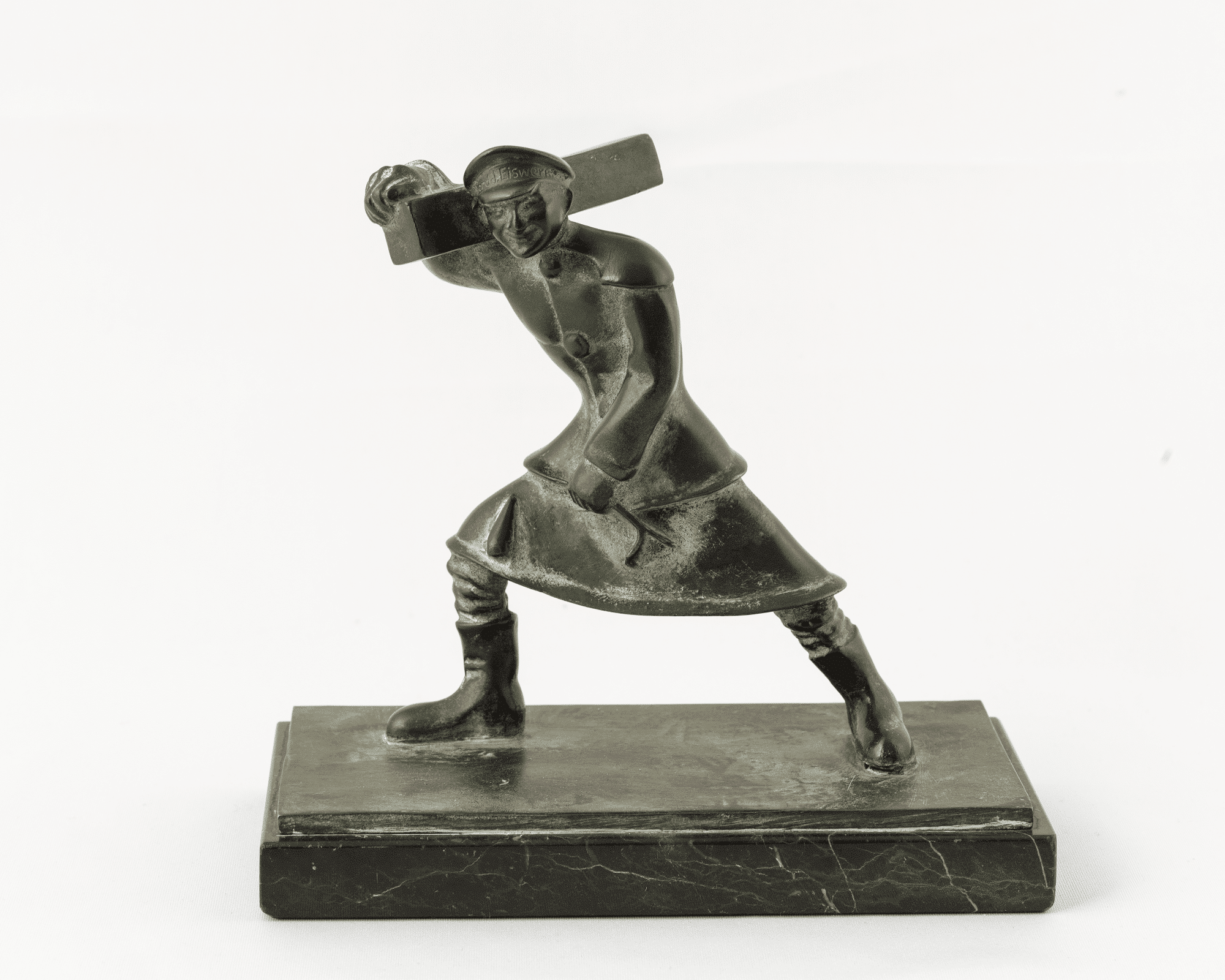
Worker with ice block, around 1920
Worker with ice block, around 1920 © Peter Thieme

The chimneys are smoking. Thousands found work in the factories in Lichtenberg. The strong economic growth is accompanied by a rapid upswing in science and research. Progress is palpable everywhere: technological innovations accelerate everyday life; new media transform the view of the world. It is a beginning that changes the familiar ways of living and the awareness of the people. They begin to demand their rights. In Lichtenberg, the working class attains self-confidence. The workers join forces and organize themselves into associations, political organizations and unions. Lichtenberg becomes a center of the labor movement.

WHERE?

Dive Into Diversity. A stroll through the different neighborhoods of Lichtenberg.

Karlshorst

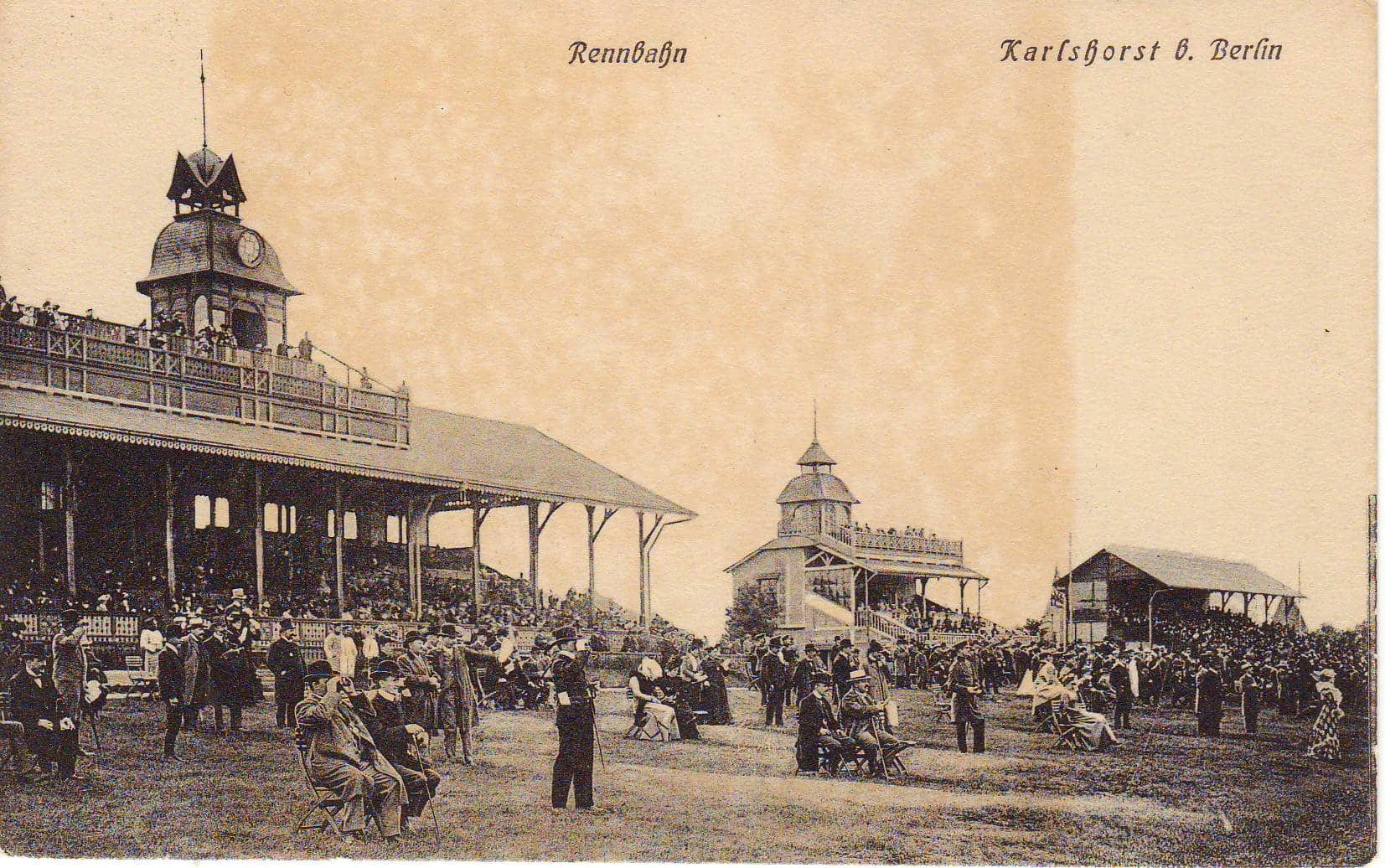
Postcard of the racecourse in Karlshorst<br>photo: Museum Lichtenberg
Postcard of the racecourse in Karlshorst

Karlshorst, located in southern Lichtenberg, is a place of astonishing contradictions. Since 1894, a horse racing track has attracted visitors to this suburb of Berlin. Beginning in 1894, the Emperor arranged for affordable housing developments to be constructed as a social model project. Karlshorst also quickly developed into a hotly desired residential district for Berliners who were better off. Numerous villas and manors were built here.

In 1945, Karlshorst became a site of world history: on May 8, 1945, representatives of the German armed forces signed the unconditional surrender of Germany here in the officers’ club. With this, the Second World War came to an end in Europe. This is still commemorated today in the Museum Berlin-Karlshorst.

The Soviet Army marched into Karlshorst in April of 1945 and declared the entire residential district a restricted zone. From this time, the Soviet Military Administration in Germany ruled from Karlshorst. In addition, the German headquarters of the Soviet secret service KGB was located here from 1954 until 1991, which was the largest KGB headquarters outside of the Soviet Union. The Soviet military forces did not leave Karlshorst until 1994.

The traces of the nearly 50-year presence of the occupying powers are still visible today, even if residential life has long since become the area’s focus. Former military locations like the Festungspionierschule (military cadet school) have been converted for residential purposes. In addition, the residential buildings in the district have been thoroughly renovated, the infrastructure has been expanded and housing development projects have been realized. And so Karlshorst has once again become a popular residential district with many people moving into it, especially young families.

WHO?

People In and From the District.

Oskar Ziethen

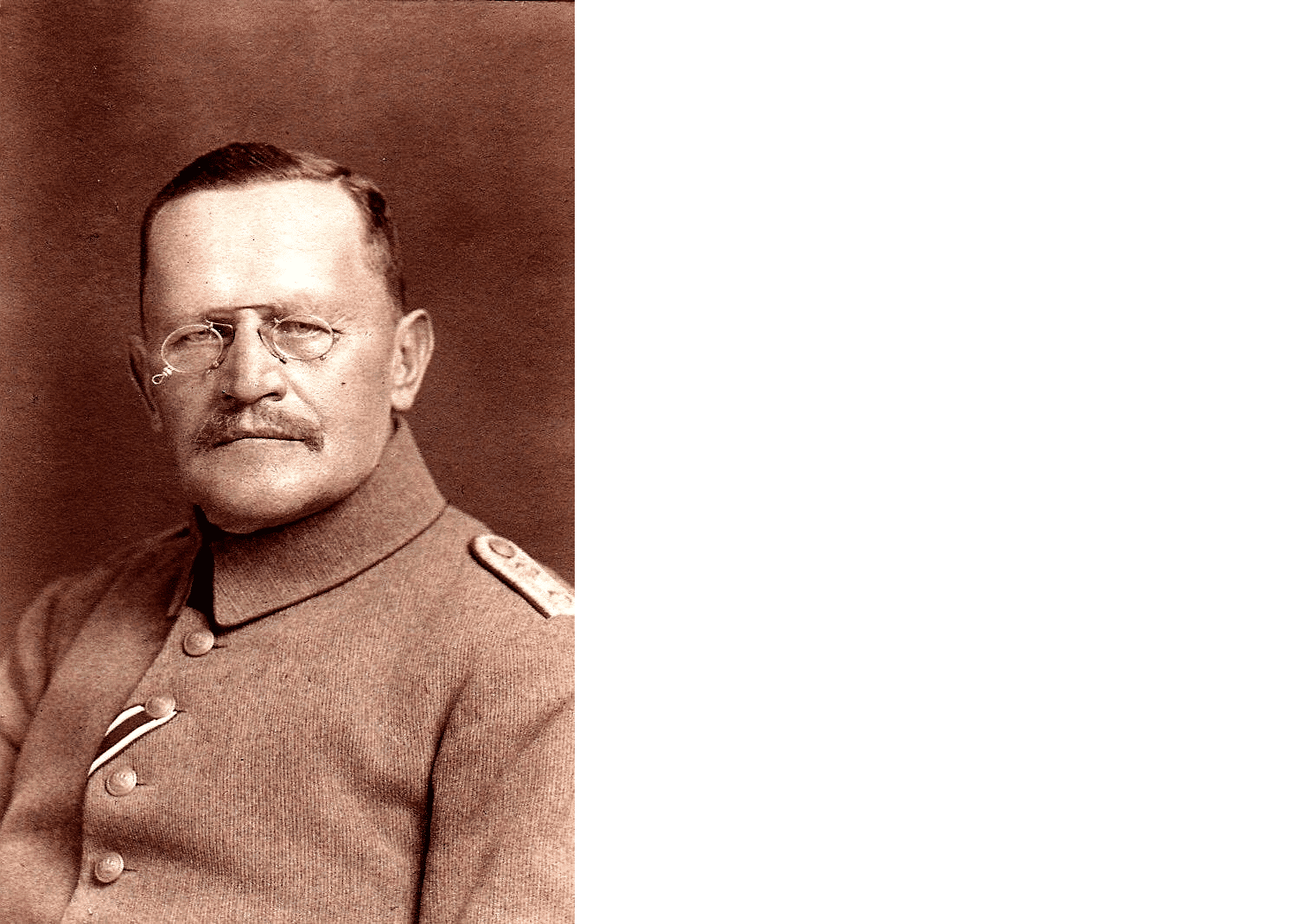
Oskar Ziethen 1915, Kritzinger Collection, Museum Lichtenberg

The local politician Oskar Ziethen (1858 – 1932) is known as a pioneer of modern Lichtenberg. He led the rural community along the path to become an industrial metropolis and part of Greater Berlin. As a community leader, he organized and accompanied this ascent in a significant way beginning in 1896. Under his leadership, institutions such as hospitals, schools, the city hall and the district office, water and electrical utilities were built in a very short time. He also expanded the traffic routes and created favorable conditions for the establishment of trade and industry. His ambitious work paid off: people came to Lichtenberg along with the industry and the community grew to 70,000 inhabitants by 1907. The Emperor granted Lichtenberg a town charter in the same year. Thus, the former village became the city of Lichtenberg – and in 1908 Ziethen became its first mayor.

Ilse Stöbe
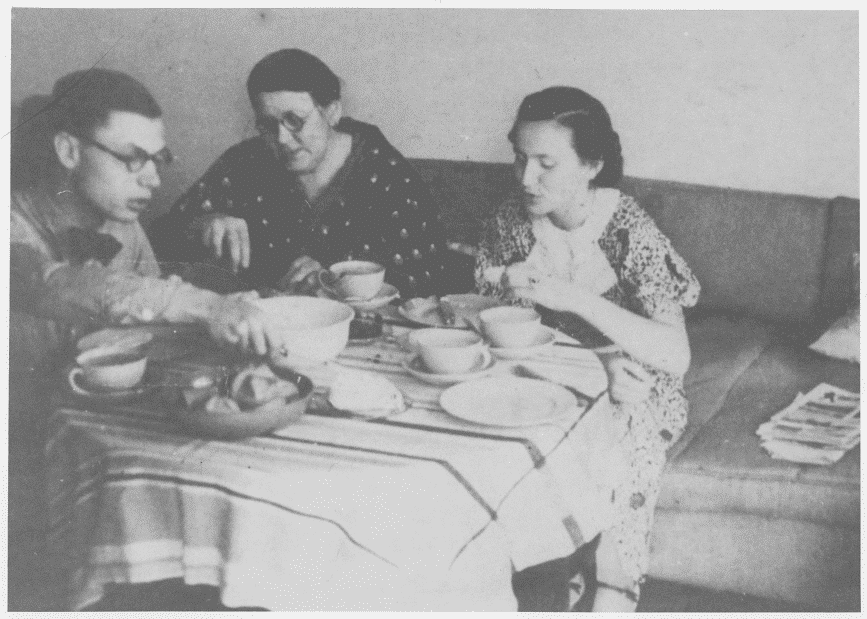
Photo of Ilse Stöbe with Kurt Müller and Frieda Stöbe, 1930s, photo: German Resistance Memorial Center

The Lichtenberg resident Ilse Stöbe (1911 – 1942) was a member of a resistance network during the Third Reich. She worked as a journalist and for the information department of the Federal Foreign Office. She forwarded the information collected there to the Soviet news service, but her warning about the pending ambush by the German armed forces on the Soviet Union on June 22, 1941 was ignored. She paid for her resistance to the Nazi regime with her life. When the Soviet secret service tried to contact her after the invasion of the German troops, the Gestapo found out. Stöbe was arrested in September 1942 and sentenced to death in December of the same year by the Reich Military Court. She was hanged in Plötzensee on December 22, 1942. Years later, the GDR Ministry for State Security took up her story and dedicated a monument to her.
WOW!

Surprising Things from Lichtenberg

“Made in Lichtenberg”

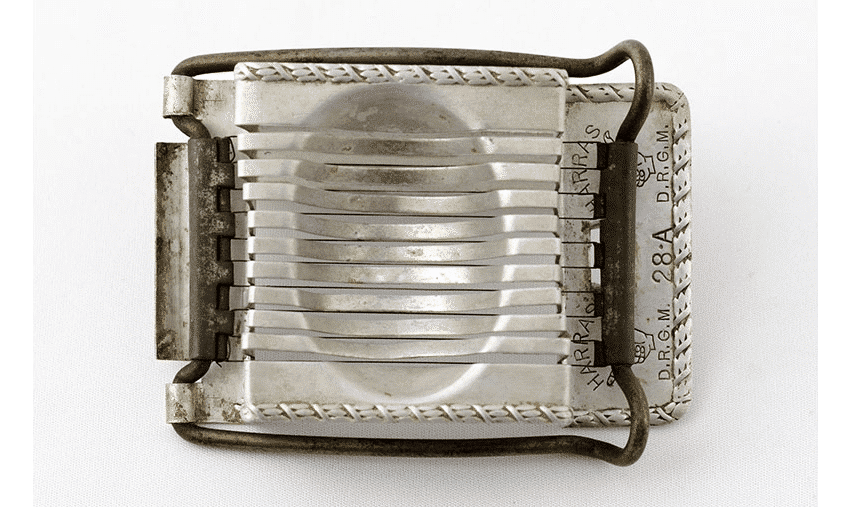
Harras original egg slicer, invented in 1909 in Lichtenberg, patented in 1911 – and at home today in nearly every kitchen
Harras original egg slicer, 1930s
photo: Peter Thieme

The Egg Slicer

Willy Abel (1875 – 1951) was an engineer, inventor and founder of the Harras factory in Lichtenberg. He embodies the spirit of the industrial awakening that prevailed at the beginning of the 20th century in Lichtenberg since he developed an entire series of mechanical “household helpers”. In 1909, for example, he invented a device to quickly cut eggs. Abel patented it in 1911 and began mass-producing it in his Harras factory from 1912. Over ten million Harras original egg slicers were sold in a very short time. They were especially popular in the USA. To this day the egg slicer is a fixture in many kitchens. Willy Abel, the so-called “father of the German household appliance industry” and “pioneer of modern kitchen appliances”, invented both the egg slicer and the bread cutting machine with circular knives, millions of which would be sold and are still famous around the world today. Both objects can be seen in the permanent exhibition.

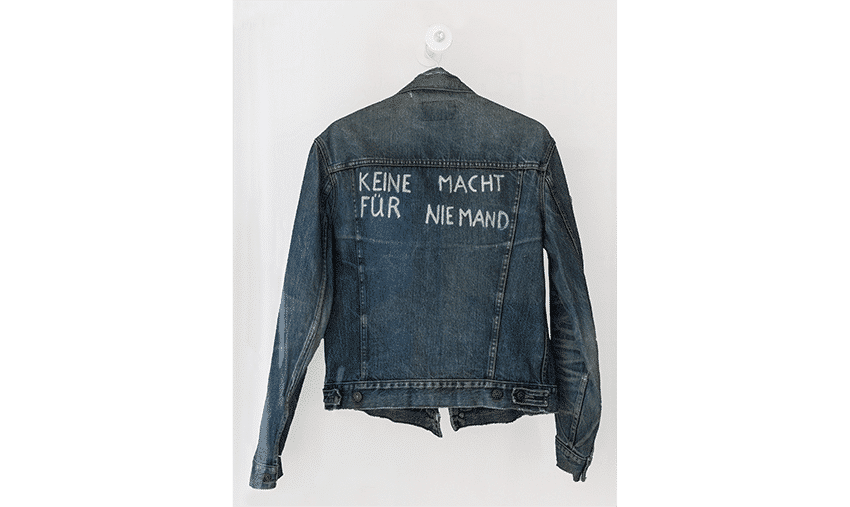
Jeans jacket, 1983, loaned by M. Horschig
Jeans jacket, 1983, loaned by M. Horschigs
photo: Peter Thieme

Jeans Jacket

This jeans jacket belonged to one of the punks of East Germany. They were bold enough to break out of the state-imposed lifestyle, to be different – and to show this in a striking way. One of their meeting points was the Erlöserkirche in Lichtenberg, a church where they connected with others who were resisting. Together, they created a space for free thinking. The jacket can be seen in the permanent exhibition.

 Souvenir for the 750 years celebration, 1987, Museum Lichtenberg, photo: Peter Thieme
Souvenir for the 750 years celebration, 1987s
photo: Peter Thieme

Teddy

Dào Quang Vienh received a teddy bear like this as a gift upon his arrival at the rooming house on Gehrenseestraße. Vienh came to Lichtenberg as a contract laborer in 1987, just as Berlin was celebrating its 750th birthday. The bear was the mascot of this anniversary celebration. At the time, Vienh worked at a sewing machine at VEB Herrenbekleidung Fortschritt, making men’s clothing. Today he lives as a photographer in Berlin. His bear now lives with his family in Vietnam, but a similar mascot can be seen in the permanent exhibition.

Background Information on the Permanent Exhibition

Many wonderful people accompanied and supported Museum Lichtenberg on its path to the new permanent exhibition. We would like to thank the curator Julia M. Novak, the initiator and former museum director Dr. Thomas Thiele, the project manager Dr. Tim Weber, for the design and graphics buerojolas with Tim Jolas, Jule Garschke, Johanna Hoffmann, Isabell Latza as well as Büro Rotes Pferd for the realization.

Special Exhibitions

The special exhibitions take a closer look at themes from history, living and working in Lichtenberg. Individual people, events or places are presented here and placed in connection to the present.
The special exhibitions are an invitation to take a closer look, to learn things worth knowing about Lichtenberg and to enter into conversation with the here and now.

Memory in Lichtenberg

“After the Liberation – Perspectives on the End of the War in Lichtenberg”. Duration until 03.09.2025

There are many perspectives on the end of the war in Berlin in the spring of 1945. Even in the district of Lichtenberg, the events 80 years later cannot be reduced to a single concept. The liberation from fascism through the Red Army’s arduous battle remains a defining narrative.
However, if the focus shifts from the act of liberation – from fighting, conquering, destroying and dying – to the time afterwards, the experience of liberation recedes into the background. Violence, despair, misery, uncertainty and guilt characterize the attempts to create a new normality. How did the people of Lichtenberg experience the end of the war and the first post-war months? What hopes, but also what fears and hardships characterized this time? What expectations did the people of Lichtenberg associate with the end of National Socialist rule?
Our exhibition opens up perspectives on the end of the war that have so far received little attention and have been partly suppressed. It illustrates the confusing situation of that time – its influence on daily survival, the struggle for a new order and the search for moral orientation in a world that had fallen apart at the seams.

Accompanying program:

Wed, 09.07.2025, 18:30
A clear line from day one. The Ulbricht Group in post-war society
In conversation with Dr. Ilko-Sascha Kowalczuk, historian and author of the current biography of Walter Ulbricht

Tue, 02.09.2025, 18:30
Questions about the end of the war. Remembering and commemorating in Lichtenberg today
In conversation with Christoph Meißner, historian and curator of the traveling exhibition “Rupture through Europe”